
Beach Sand vs Fill Sand: What’s the Difference and When to Use Each

Buy the wrong sand for a project and the problem may not show up right away. A patio can settle. A low spot can wash out. A play area can feel dusty or gritty. Sand looks simple in a pile, but the type of sand matters.
Beach sand and fill sand are both useful, but they are not interchangeable. One is usually chosen for comfort, appearance, and light surface use. The other is chosen for bulk, leveling, and building up ground. The best choice comes down to texture, cleanliness, drainage, and how much weight the sand needs to support.
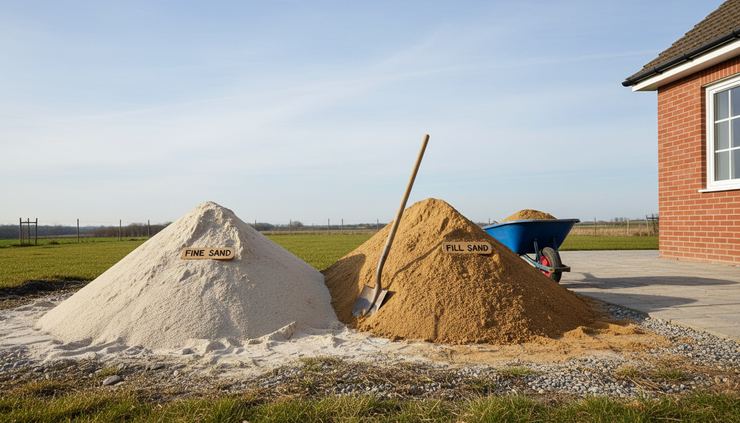
What beach sand is
Beach sand is the fine, soft sand most people picture when they think of a shoreline. It is often light in color, smooth underfoot, and made of small rounded particles. Those rounded grains are part of what makes it feel pleasant for barefoot use.
The exact makeup varies by region. Some beach sand contains quartz. Some includes tiny shell fragments. Some is naturally darker or more golden depending on local stone and minerals. For landscaping and delivery purposes, “beach sand” usually refers to a clean, screened sand that mimics the feel and look of natural beach sand.
Good beach sand is valued for:
Soft texture
Clean appearance
Low dust when properly washed
Easy spreading for light surface projects
Comfortable feel in play and recreation areas
Beach sand does not usually compact into a firm structural layer. That softness is a benefit in a sandbox, but a weakness under heavy hardscape materials.
Think of beach sand as a finish material, not a foundation material. It can cover, cushion, and improve the look of an area. It should not carry a patio, driveway edge, retaining wall base, or heavy load.
What fill sand is
Fill sand is used to fill space, raise grades, and level uneven ground. It is a practical construction and landscaping material, not a decorative one. It may be coarser than beach sand and can contain a mix of particle sizes.
Fill sand is often chosen because it is affordable in bulk and easier to move and shape than heavier fill materials. Depending on the source, it may contain fine particles, small stones, or some silt. Screened fill sand is more consistent. Unscreened fill may be rougher and better suited for deeper fills where appearance does not matter.
Fill sand is valued for:
Building up low areas
Backfilling around outdoor features
Leveling under lawns or landscape beds
Improving grade before adding topsoil
Filling holes, ruts, or depressions
The big difference is performance. Fill sand is meant to take up volume and help shape the land. It can compact better than soft, rounded beach sand, especially when it has a range of particle sizes. That makes it more useful under areas that need support, though it still may not replace crushed stone or engineered base material for structural work.
Beach sand and fill sand have different strengths
At a glance, both materials may seem close enough. Once they are under a patio, play set, or lawn, the differences become clearer.
Feature | Beach sand | Fill sand |
Typical texture | Fine, soft, smooth | Coarser or mixed, more practical |
Main purpose | Comfort and appearance | Filling, grading, and leveling |
Compaction | Usually poor to moderate | Often better, depending on mix |
Drainage | Can drain if clean, but may shift | Varies by source and fines content |
Best visible use | Sandboxes, beach-style areas, decorative spaces | Usually hidden under soil, turf, or base layers |
Best structural use | Limited | Better for non-engineered fill and grade correction |
Cleanliness | Often washed or screened | May be screened or unscreened |
Cost in bulk | Often higher | Often more economical |
The key point is simple. Beach sand is selected for feel. Fill sand is selected for function.
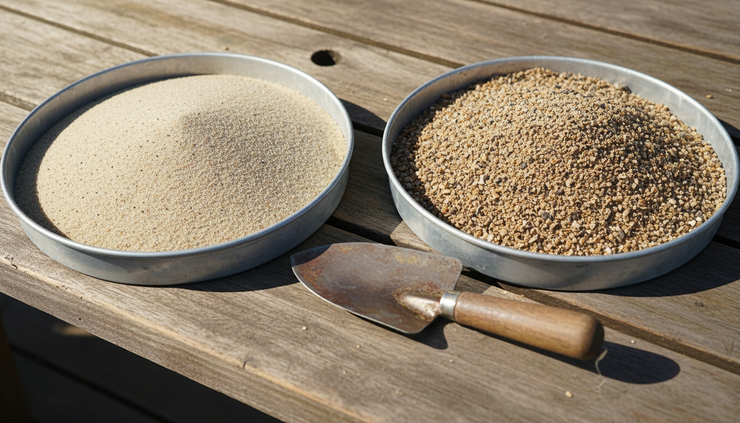
When to use beach sand
Beach sand works best where people will see it, touch it, or walk on it lightly. It brings a clean, relaxed look and feels better than rough construction sand.
Use it for play areas
Beach sand is a popular choice for sandboxes and play zones because it is soft and easy to dig. For any child play area, choose sand that is washed, screened, and labeled safe for play use. Avoid random job-site sand or fill material for sandboxes, since it may contain debris, dust, or rough particles.
Beach sand also works well around backyard beach themes, volleyball areas, and casual seating spots. It can create a softer surface, but it should still have a proper border. Without edging, fine sand migrates into lawns, beds, and walkways.
Use it for decorative landscaping
Beach sand can brighten a small landscape area, especially around fire pit seating, coastal-style gardens, water features, or dry creek accents. It pairs well with larger stones, shells, driftwood-style accents, and dune grasses.
It is not always the best choice for windy areas. Fine sand can blow away if exposed. In rainy areas, it can also wash into nearby beds or drains without proper containment.
Use it as a light top layer
Some projects call for a clean sand surface over a more stable base. For example, a backyard beach area may have compacted subgrade below, fabric if appropriate, edging, and a layer of beach sand on top.
Keep the depth reasonable and maintain it over time. A soft sand surface will shift with foot traffic, pets, water, and raking.
When to use fill sand
Fill sand is the better choice when the goal is to raise, level, or support an area before the finished surface goes down.
Use it for leveling low areas
Fill sand can help correct dips in a yard, especially before adding topsoil or sod. It spreads easily and can be shaped to direct water away from structures.
For lawn repair, do not leave a deep layer of pure sand on top of existing grass unless the soil conditions call for it. In many yards, a blend of sand and topsoil works better for topdressing because it supports grass roots and holds nutrients.
Use it for building up grade
If an area sits too low, fill sand can add volume quickly. It is useful under landscape beds, around non-structural features, and in areas where the final surface will be soil, mulch, turf, gravel, or another cover.
Add fill in layers and compact as needed. Deep loose sand can settle later. That settling can create uneven lawns, sunken pavers, and low spots that collect water.
Use it for backfilling
Fill sand is often used around pipes, utility trenches, and landscape features because it can fill voids and reduce sharp pressure points. For technical uses near utilities or foundations, follow local code and project specifications. Some jobs require specific bedding material, drainage stone, or compacted aggregate rather than general fill sand.
Which sand is better for paver bases
Paver projects are where sand choice causes the most confusion. Beach sand feels clean and easy to spread, but that does not make it a good paver base.
Most paver installations need a compacted base made from crushed stone or a similar aggregate. Over that base, installers add a thin bedding layer of sand, then the pavers. The joints may receive polymeric sand or another jointing material.
Beach sand is usually a poor choice for this job because it is too fine, too rounded, and too prone to shifting. It does not lock together well under load. That can lead to movement, uneven edges, and settling.
Fill sand may be useful in some parts of the preparation, especially for raising a low area before the actual base is built. But it should not automatically replace paver base material. If the fill sand has too many fines or does not compact well, it can hold water or settle.
For patios, walkways, and driveways, look for materials specified for paver installation:
Compactable crushed stone for the base
Concrete sand or bedding sand for the setting layer
Proper joint sand for the paver joints
The names vary by supplier, so describe the project when ordering. Ask for sand intended for paver bedding, not beach sand.

Which sand is better for drainage
Sand can help with drainage, but only if it has the right texture and the project is built correctly. Clean, coarse sand lets water move through more easily than sand with lots of fine particles. Fine sand can slow water, compact tightly, or wash into nearby materials.
Beach sand may drain well when it is clean, but it also shifts easily. It is not the best choice for drainage trenches, under hardscapes, or behind walls.
Fill sand varies too much to call it a drainage material by default. Some fill sand drains reasonably well. Some contains enough fines to hold moisture. If drainage is the main goal, ask for a clean coarse sand or drainage aggregate suited to the job.
For serious drainage work, gravel or crushed stone is often a better choice than either beach sand or general fill sand. French drains, retaining wall drains, and wet side yards usually need washed stone, filter fabric when appropriate, and a clear outlet for water.
How to choose the right sand before ordering
A short conversation with the supplier can prevent a costly mistake. Instead of ordering by name alone, describe the job and ask what they recommend.
Use these questions before buying:
Will this sand be visible or hidden?
Does it need to feel soft underfoot?
Does it need to compact?
Will it sit under pavers, turf, mulch, or soil?
Will water need to drain through it?
Is it washed and screened?
Is it safe for play areas?
Does the project require a specific base material?
For small decorative or play projects, texture and cleanliness matter most. For leveling and grading, compaction and volume matter more. For hardscapes, follow the base system, not the cheapest pile available.
If the sand needs to support weight, choose function over appearance. A pretty sand that shifts under pressure can ruin the finished project.
Common mistakes to avoid
The biggest mistake is assuming all sand performs the same. It does not.
Another common mistake is using beach sand under pavers because it looks clean and smooth. That soft texture is exactly why it can fail under hardscape loads.
People also use fill sand in play areas to save money. That can create a dusty, rough, or dirty surface. For sandboxes and children’s play zones, clean play sand or screened beach-style sand is the safer and more comfortable choice.
Depth is another issue. Thick loose sand layers settle. Whether using fill sand for grade or beach sand for recreation, plan for edging, compaction where needed, and future maintenance.

The right sand makes the project last longer
Beach sand and fill sand both have a place. Beach sand is best for soft, clean, visible surfaces such as play areas, decorative beach-style spaces, and light recreation zones. Fill sand is better for raising low spots, shaping grades, backfilling, and preparing areas that will receive another finished material.
For pavers and drainage, be more specific. A patio usually needs compacted aggregate and bedding sand. A drainage project often needs clean coarse material or stone. General beach sand or fill sand may not be enough.
The simple rule is to start with the job, then choose the sand. If the surface needs to feel good, beach sand is often the better fit. If the ground needs to be built up or leveled, fill sand usually makes more sense. Matching the material to the purpose saves time, money, and repairs later.


Comments